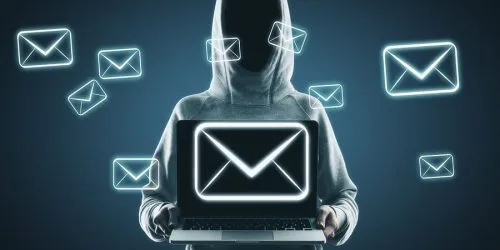
Phishing emails used to be easy to spot. Bad grammar, generic greetings, suspicious links with misspelled domains. Employees who paid attention could catch most of them. That era is over. AI phishing attacks in 2026 are indistinguishable from legitimate business email for most recipients, and the volume has exploded because AI eliminates the manual effort that used to limit how many attacks a criminal could launch.
What makes AI phishing different
Traditional phishing used templates. An attacker would write one email and send it to thousands of targets with minimal customization. The same “Dear Customer” message went to everyone. AI phishing does not work that way.
AI tools scrape publicly available information about your company from your website, social media, press releases, and LinkedIn profiles. They learn your company’s communication style, identify reporting relationships, and craft messages that reference real projects, real people, and real business context. The email your CFO receives does not look like spam. It looks like a message from the CEO about a real vendor payment that is actually due.
AI-generated phishing emails have increased click-through rates by 54% according to CISA phishing threat advisories compared to traditional campaigns. The reason is simple: they look real because they are built from real information about your organization.
The attacks hitting businesses right now
Executive impersonation. AI crafts emails that mimic the writing style of your CEO, CFO, or managing partner. The message asks an employee to process a wire transfer, share credentials, or download a document. The tone, vocabulary, and formatting match how that executive actually writes because the AI analyzed their previous public communications.
Vendor impersonation. AI generates invoices and payment requests that look identical to legitimate vendor correspondence. The banking details are changed to attacker-controlled accounts, but everything else, the formatting, the invoice numbers, the contact information, matches what your accounts payable team expects to see.
Conversation hijacking. Attackers compromise one email account, then use AI to continue existing email threads naturally. The recipient does not notice because the conversation flows logically from previous messages. The malicious request is buried inside what appears to be an ongoing legitimate exchange.
Why traditional email filters fail
Legacy email security filters look for known malicious indicators: blacklisted sender domains, known phishing URLs, malware attachments, and spam-like formatting patterns. AI-crafted phishing emails contain none of these indicators. They come from compromised legitimate email accounts, contain no malware attachments, and link to freshly created domains with no blacklist history.
The email is technically clean. The threat is entirely social: convincing a human to take an action they should not take. Technology that only examines the email itself will miss this every time.
What actually stops AI phishing
Advanced email security. Email security gateways that use behavioral analysis rather than signature matching can detect anomalies in sender behavior, message patterns, and communication flow. These systems flag emails where the sender’s behavior deviates from their established baseline, even when the email itself contains no malicious payload.
DMARC enforcement. DMARC, SPF, and DKIM configuration prevents attackers from spoofing your email domain. When properly enforced, messages that claim to come from your domain but did not originate from your authorized email servers get rejected by receiving mail servers.
Multi-factor authentication. Even if an employee clicks a credential harvesting link and enters their password, MFA enforcement prevents the attacker from accessing the account. This single control blocks the majority of credential theft attacks.
Security awareness training. Monthly phishing simulations with progressive difficulty train employees to recognize social engineering tactics rather than just scanning for obvious red flags. The training adapts as AI phishing evolves, focusing on verification behaviors rather than visual indicators that AI has already learned to avoid.
Verification procedures. Technology catches most threats. Policy catches the rest. Any request involving money transfers, credential sharing, or sensitive data should require out-of-band verification: a phone call to a known number, not a reply to the suspicious email. This procedural control costs nothing and stops the attacks that bypass every technical layer.
Building the defense
No single tool stops AI phishing. The defense is layered: email filtering catches the detectable threats, DMARC prevents domain spoofing, MFA blocks credential theft, training sharpens human judgment, and verification procedures catch everything else.
SADOS managed cybersecurity deploys all five layers as part of standard service. If your current security approach relies on a spam filter and annual training, the gap between your defenses and the current threat landscape is wider than you think.