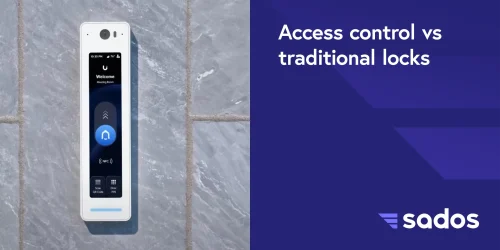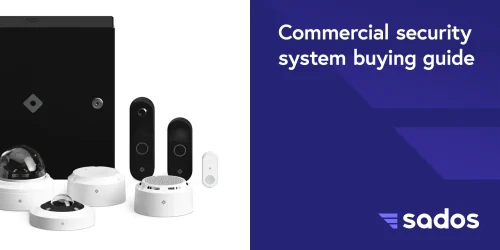

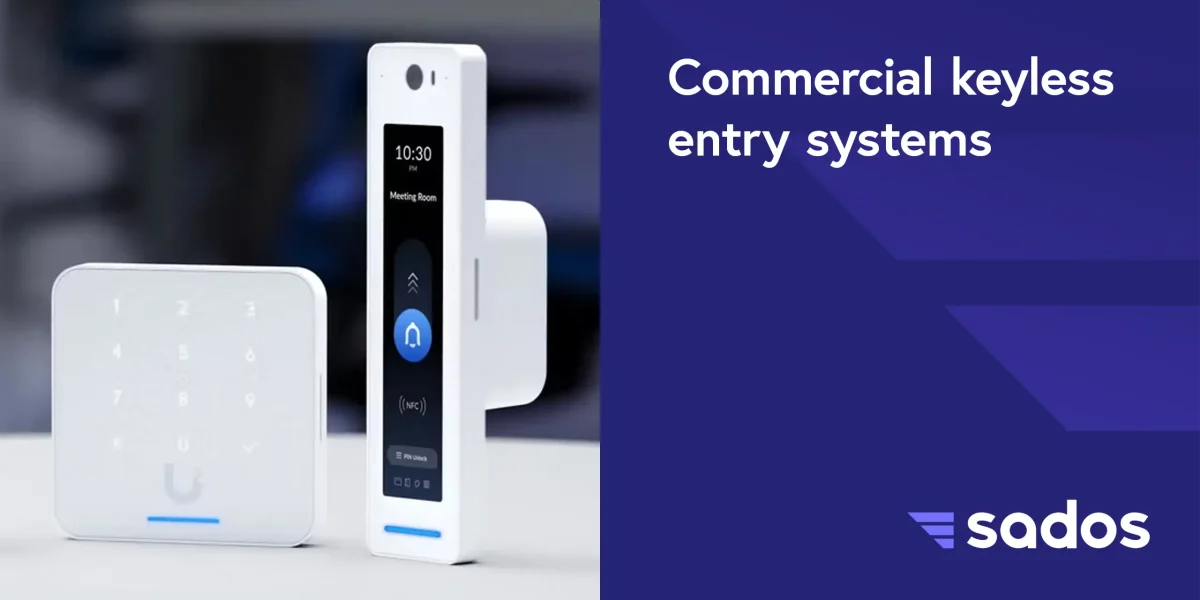
Keyless entry commercial solutions bring credential-based access to commercial spaces without the full infrastructure investment of a traditional access control system. For offices that need credential-based access on a few interior doors, server room security, or upgrade from mechanical locks without running new wiring to every door, smart locks hit a practical sweet spot between traditional locks and full access control.
What keyless entry commercial systems actually do
Keyless entry. Employees use mobile phones, PIN codes, keycards, or fobs instead of physical keys. No keys to copy, lose, or collect from departing employees. Access credentials are managed from a cloud console where changes take effect immediately across all doors.
Audit trails. Every unlock event is logged with the credential used, the time, and the door. This creates accountability that mechanical locks cannot provide. When you need to know who accessed the server room at 11pm on Tuesday, the log tells you.
Scheduled access. Office doors can unlock automatically during business hours and require credentials after hours. Server rooms and storage areas maintain 24/7 credential requirements. The cleaning crew’s PIN only works during their scheduled shift.
Temporary codes. Visitors, contractors, and delivery personnel receive codes that expire after a single use or at a specified time. No permanent credentials shared with non-employees. No forgotten key collection.
Remote management. Grant access from your phone when an employee is locked out early in the morning. Disable a departing employee’s credentials from home the moment HR notifies you. Check the access log from anywhere with an internet connection.
Smart locks vs full access control systems
Smart locks work best for interior doors, small offices, and locations where running low-voltage wiring is impractical or cost-prohibitive. They operate on batteries or existing door power with WiFi or Bluetooth connectivity. Installation is relatively simple, often replacing existing lock hardware without modifying the door frame.
Full access control systems are better for main entry points, high-security areas, and buildings with many controlled doors. They use wired power, dedicated controllers, and centralized management that handles hundreds of doors and thousands of credentials. For buildings needing both, smart locks and access control systems can integrate into a single management platform.
What to look for when buying
BHMA/ANSI grading. Commercial smart locks should meet ANSI/BHMA Grade 1 or Grade 2 standards for durability and security. Residential-grade locks marketed as “commercial” will fail under the daily use volume of a busy office door.
Battery life. Battery-powered smart locks typically last 12 to 24 months between changes depending on traffic volume. Look for low-battery alerts pushed through the management platform so locks never fail silently.
Fail-safe vs fail-secure. Fail-safe locks unlock when power fails, which is required for most egress doors by fire code. Fail-secure locks remain locked during power failure, appropriate for server rooms and high-security storage. Choose the correct mode for each door’s function and fire code requirements.
Integration capability. If you plan to add full access control later, select smart locks compatible with major access control platforms so you do not replace hardware during the upgrade.
Getting started
SADOS assesses your doors, evaluates your security requirements, and recommends the right hardware for each location during a site visit. For offices needing a few controlled interior doors, smart locks often deliver the access control, audit trails, and convenience that mechanical locks cannot provide, at a fraction of the cost of a full system installation.